
Okay, so check this out—Solana looks fast and clean on paper. Wow! The UI can still hide layers of nuance, though. My instinct said it was easy at first, but then I spent a few mornings chasing a weird token transfer and realized I was only seeing the surface. Initially I thought “transaction = transfer,” but actually transactions bundle many inner instructions and programs, so decoding them matters if you want reliable answers.
Whoa! Let me be blunt: explorers are your forensic tools. Seriously? Yes. They let you take a signature (txid) and follow the breadcrumb trail. Short story—if you want to audit a mint, trace a rug, or just confirm a swap, you need to know which fields to trust, which to question, and what to check next. This article walks through SOL transactions, token tracking, and NFT forensics with concrete steps and practical habits I use (and sometimes mess up—somethin’ to own up to…).
First, the basics. Transactions on Solana are bundles of instructions executed by on-chain programs. Medium-sized wallets often send multiple instructions in one transaction: transfer SOL, call a market program to swap, then call a token program to update an associated account. If you only look at the top-line “value” you miss the inner story. On one hand that simplicity is great—on the other hand you can be misled if you don’t check inner instructions and program logs. Hmm… that nuance is key.
How to read a SOL transaction (step-by-step)
Start with the signature. Really? Yes—paste the tx signature into an explorer search box and load the full view. Here’s the thing. Check the status first. Then look at the block time and fee. Short step: note the “confirmations” and the slot. Now dive into instructions. Most explorers label program calls (System, SPL Token, Serum, Raydium, Metaplex). On the surface, an instruction list tells you “what happened.” But logs reveal execution details and errors. Initially I skimmed logs; later I learned to read them like receipts. Actually, wait—let me rephrase that: logs often show token minting events, CPI calls, and custom program debugging output, so they’re crucial for troubleshooting.
Look for inner instructions. Inner instructions are where token transfers triggered by programs show up. On one hand you might think a single token transfer is simple—though actually a swap might create 4 transfers behind the scenes. If you trust only the high-level “source -> destination” line you can miss rewards, fees, or stealth airdrops. Also check pre- and post-token balances to confirm amounts; floating-point or decimal interpretation errors are common if you don’t account for token decimals.
Check the accounts list next. Accounts tell you which tokens and programs were touched. If a creator or known marketplace appears there, that’s a good red flag or green flag depending on context. (oh, and by the way…) If metadata accounts are there, you can usually follow them to confirm which NFT mint was involved and who the on-chain creator was. But remember—metadata can point to off-chain JSON that could be moved or removed, so always verify the content hash if it’s available.
Token tracker tips — what to watch for
Use the token page to see supply, holders, and recent transfers. Short burst: Really? Yep. Start by checking the total supply against the minted amount reported on the token mint account. If there’s a mismatch, dig into mint authorities and freeze authorities. On one hand token explorers list holders and percentages. On the other hand those lists can hide recently created accounts or wrapped tokens that inflate counts.
Filter transfers by instruction type to isolate mints, burns, and programmatic transfers. My habit: when I audit a token I sort holders by balance and then check the top few addresses for custodial patterns (many custodial services have predictable address behavior). I’m biased, but spotting an exchange deposit address early saves a lot of guesswork. Also check for repeated tiny transfers—bot activity often leaves patterns that hint at wash trading or airdrop farming.
Tip: watch the change in token decimals. If a token has unusual decimals, you can misread amounts. Also, use the token’s mint account to view mint authority and freeze authority—those two fields tell you whether future inflation or freezes are possible. If mint authority is still active and held by a single key, that’s a risk. I’m not 100% sure about every project, but that’s a practical red flag I look for.
NFT tracker essentials — provenance, metadata, and creators
NFTs look simple: one mint, one owner. But NFTs have provenance. Start by checking the mint’s creation transaction. Who paid the fees? Which program minted it—Metaplex or a custom program? Then open the metadata account to find the URI pointing to JSON with image, attributes, and external links. Something felt off about many NFT claims I saw—lots of projects rely on off-chain links that can be changed. So if the metadata is mutable, note it. If the metadata points to an IPFS hash, that’s better for permanence.
Check creator verification flags if available. Many marketplaces and explorers expose a “verified” flag set by Metaplex standards; that’s useful but not infallible. Verify the token’s royalty settings and whether creators retained special rights on mint. Also trace the first owner and the mint authority—those tell you if a project preserved community-oriented distribution or kept reserves for insiders.
Pro tip: use an NFT’s transfer history to gauge market behavior. Rapid flips with tiny price deltas often indicate bot-driven mint flips. Long periods of dormancy followed by sudden sales can indicate delayed listing or targeted drops. That pattern analysis isn’t perfect, though it’s useful for forming hypotheses before deeper due diligence.
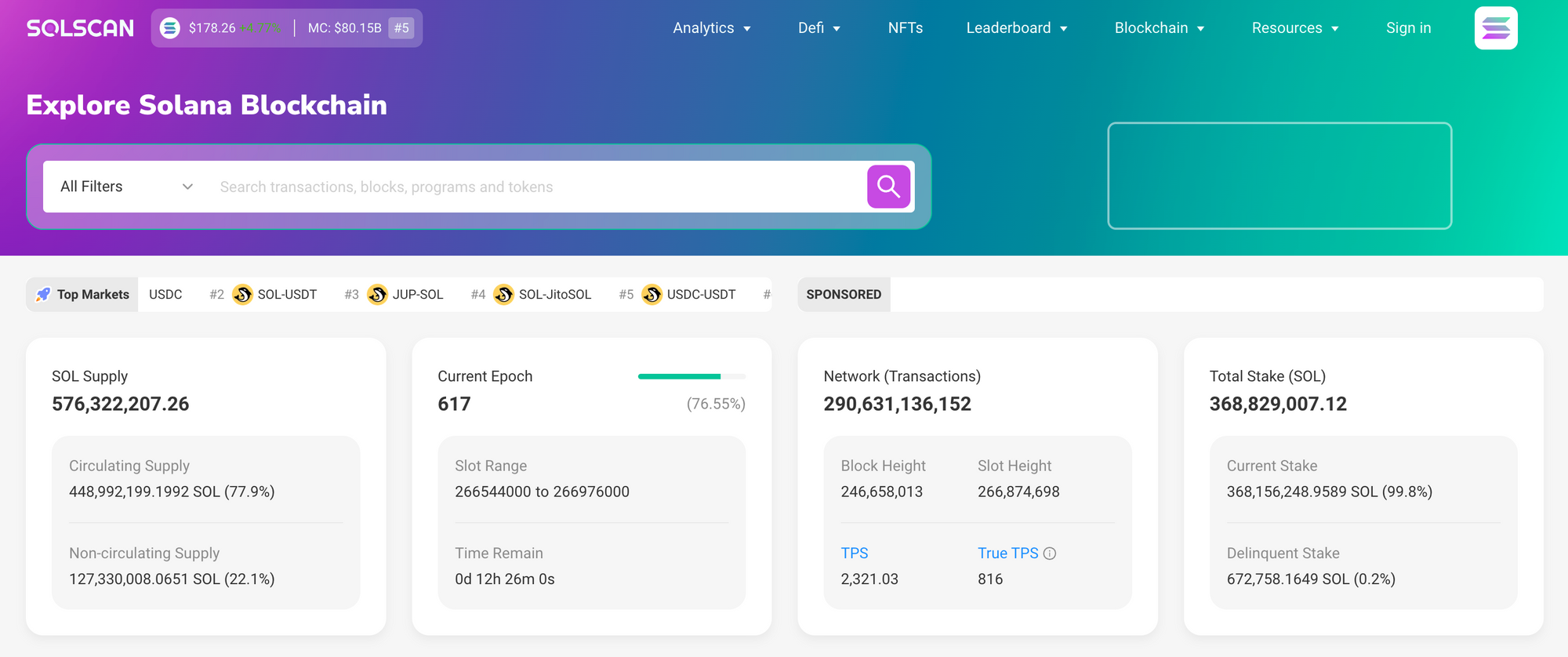
Where do I recommend you start exploring? For hands-on checking I often default to solscan explorer because its interfaces for transactions, tokens, and NFTs are focused and practical. It’s not the only tool in town, but it’s a dependable starting point in my workflow.
Performance note: explorers depend on indexers and RPC nodes. If an explorer seems delayed or missing values, refresh, try a different cluster (mainnet-beta vs devnet), or query the RPC directly. Sometimes metadata hasn’t propagated to the indexer yet. Also be wary of rate limits and use caching where possible if you’re pulling lots of data for analysis.
Common questions
How do I verify an NFT’s metadata is immutable?
Check the metadata account for an update-authority and a flag indicating mutability. If update-authority is set to a known or active key, metadata may be changeable. If the URI points to an IPFS hash (not an HTTP mutable link), that’s a stronger sign of immutability—though content could still be rehosted elsewhere.
How can I trace where a token’s supply went?
Start from the mint account to list mint events and use the token transfer history to follow large movements. Sort transfers by amount and by timestamp, and inspect the recipient account types (exchange deposit patterns, multisig, or contract accounts). Pre- and post-balance checks are critical.
What does “inner instruction” mean and why does it matter?
Inner instructions are calls made by one program to another during the same transaction. They reveal secondary token transfers or contract interactions not obvious in the top-level instruction list. Many critical actions—like liquidity pool updates, fee distributions, and cross-program transfers—show up as inner instructions.
Okay, last thought—blockchains reward curiosity. Seriously. If you practice checking signatures, reading logs, and following mint authorities, you’ll be able to separate hype from meaningful on-chain facts. I’m biased toward hands-on inspection, and that habit has saved me from buying into sloppy launches more than once. This part bugs me—too many people make big decisions from top-line numbers alone. So take five minutes per project. It pays off. Hmm… I’m not done thinking about edge cases, but that’s a practical playbook to get you started.